
Quick answer for siding repair or replacement
Use this guide when siding damage is visible but you are not sure if repair is enough. Start with the specific problem, compare material and access factors, then request a written scope before choosing a siding or deck contractor. This article gives homeowners a practical checklist, useful comparison table and trusted next links.
Siding repair or replacement quick answer
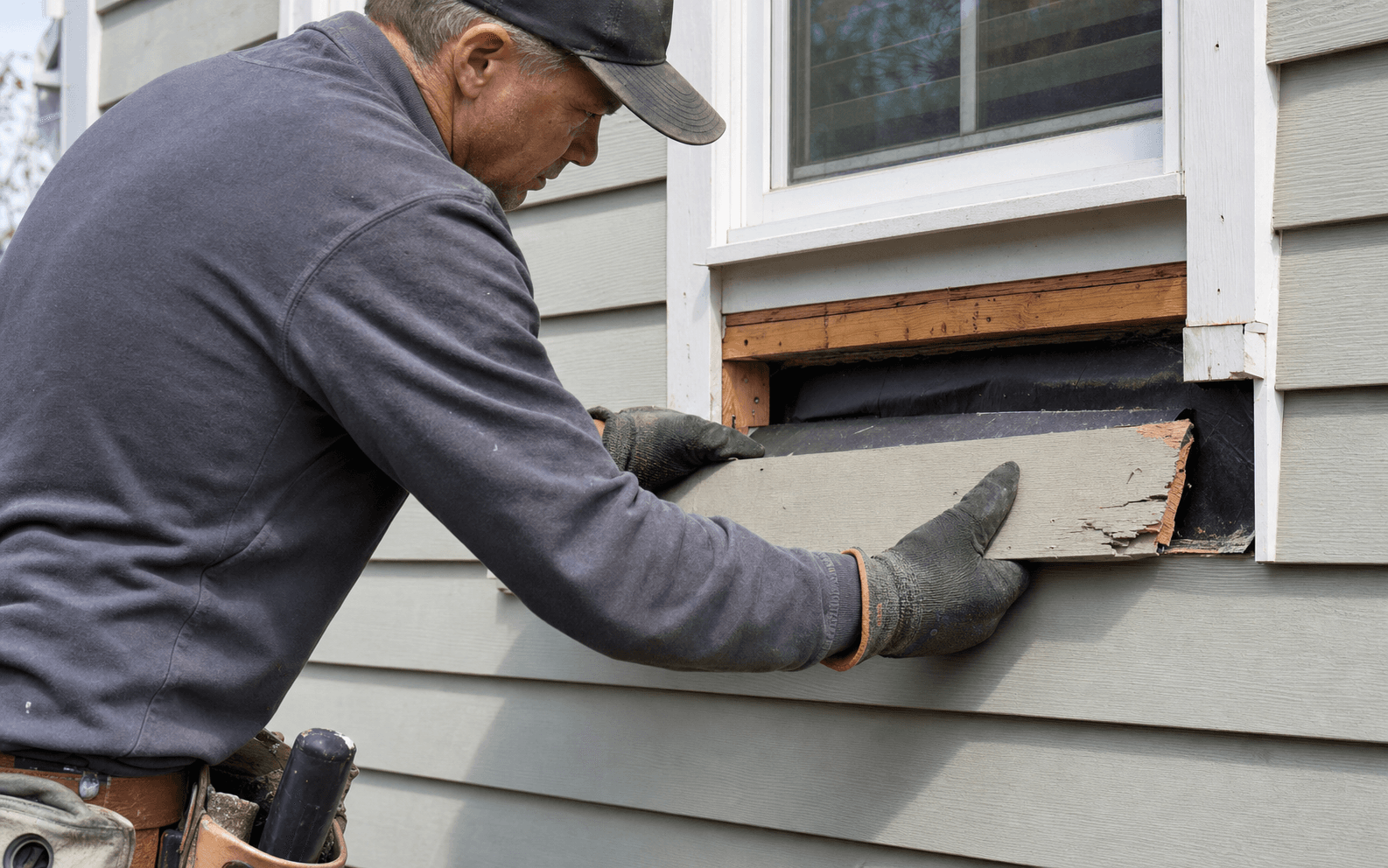
Siding repair or replacement should start with the size of the damage. If one wall section, trim board or small weather-exposed area is failing, repair may be enough. However, if the same issue appears across several elevations, replacement usually creates a cleaner and more durable result.
When siding repair makes sense
Repair can be the right choice when the problem is localized: a few damaged boards, isolated trim failure, loose panels or a small section exposed to weather. In addition, a repair-first review keeps the scope controlled and helps avoid replacing materials that are still performing.
Siding repair warning signs to document
Before requesting an estimate, take photos of cracks, swelling, loose boards, failed caulk, soft trim and paint that bubbles soon after repainting. These details help the contractor understand whether the problem is cosmetic, water-related or connected to a larger exterior system issue.
When full siding replacement is stronger
Replacement becomes more logical when damage is widespread, maintenance keeps repeating, paint is failing across the home or moisture has moved behind the exterior. In those cases, a new siding system can improve protection, curb appeal and long-term maintenance at the same time.
Cost factors for siding repair or replacement
Cost depends on square footage, access, removal, disposal, trim details, weather barrier work and the material selected. Therefore, a lower estimate is not automatically better unless it clearly explains what is included and what happens if hidden damage is discovered.
Material decisions for California homes
Fiber cement, engineered wood and vinyl each have different maintenance, appearance and durability profiles. Many California homeowners compare James Hardie fiber cement with other options because sun exposure, rain, repainting cycles and fire-zone concerns can affect the final decision.
Best next step before signing
Ask for a written scope that names the material, removal assumptions, trim details, preparation work and finish expectations. Finally, compare the repair plan against replacement so you understand both the short-term and long-term cost before approving the project.
| Situation | Better option | Why |
| One damaged wall section | Repair | Keeps the scope focused |
| Repeated failures | Replacement | Solves the system-level problem |
| Major curb appeal goal | Replacement | Creates a consistent finish |
| Small trim damage | Repair | Targets the weak point |